
Field Notes · July 7, 2026 · 5 min · By Casper Whitfield
Cold Spoons, Tea Bags, Cucumber: What Home Remedies Actually Do
The classic kitchen fixes for dark circles are not useless, but they are not treatments either. What each one genuinely does, how long it lasts, and when to stop relying on them.
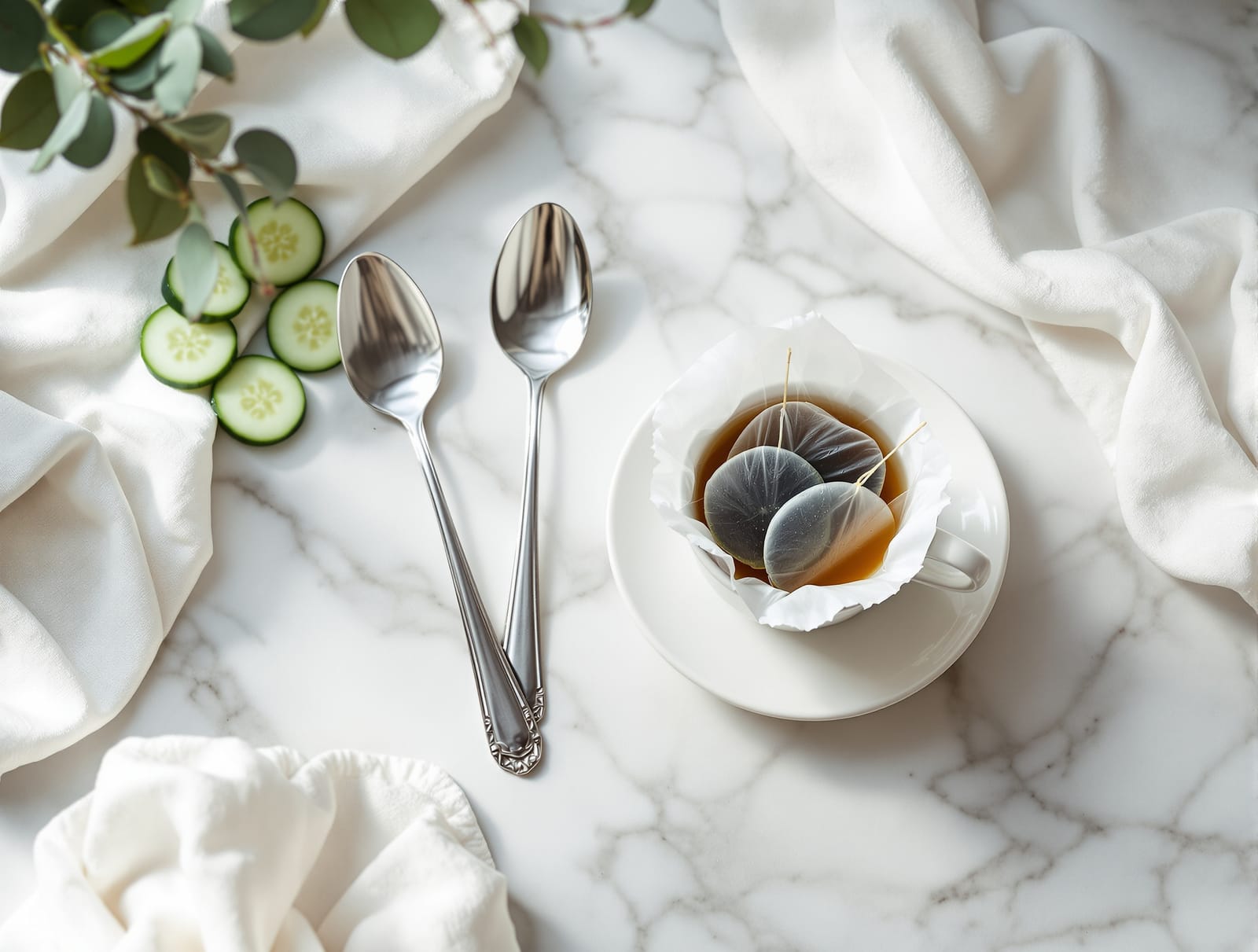
Every family has a version of the advice: cold spoons from the freezer, damp tea bags, cucumber slices, a splash of cold water before the big meeting. These remedies persist because they are free, harmless, and not entirely wrong. They are also routinely oversold, including by people selling nothing at all. The useful move is to separate what each one actually does from what folklore claims it does.
Cold works, briefly, on one thing. Almost every classic remedy is a delivery system for cold. A chilled spoon, a cold compress, refrigerated cucumber, a cool gel mask: all of them constrict the small blood vessels under the eye and push back the overnight fluid that collects there. That produces a real, visible improvement in morning puffiness and in the bluish cast of vascular circles, for somewhere between twenty minutes and a couple of hours. Nothing about the spoon or the cucumber matters beyond its temperature and shape. Cold is the ingredient.
Tea bags bring cold plus a little caffeine. The tea bag remedy has a slightly better resume than the others, because black and green tea contain caffeine, and topical caffeine constricts superficial vessels, the same mechanism used in many eye creams. A cool, damp tea bag therefore delivers a modest double effect on vascular circles and puffiness. The effect remains temporary, the dose is small and inconsistent, and warm tea bags on closed eyes carry a minor caution: sensitive skin can be irritated by prolonged contact, and anything applied near the eye should be clean.
Cucumber is mostly water at a nice temperature. Cucumber slices hydrate the skin surface slightly and cool it. Claims about special enzymes or brightening compounds in cucumber are not supported in any meaningful clinical way. As a five-minute ritual it is pleasant and harmless. As a pigment treatment it is a vegetable.
What no kitchen remedy touches. The three-type framework explains the ceiling. Brown, melanin-based circles do not respond to cold, caffeine, or produce; they need pigment-directed topicals, sun protection, and sometimes procedures. Structural shadows from a tear trough hollow or a fat bag are anatomy, and anatomy does not care about spoons. If your circles look identical at every hour of every day, home remedies were never going to move them, and no amount of consistency will change that.
When the remedies are actually the right call. If your circles fluctuate, worse after short sleep, salty dinners, alcohol, or allergy season, then the cheap, cold, five-minute fixes are a perfectly rational tool for the bad mornings, alongside the boring structural habits: sleeping with the head slightly elevated, managing allergies instead of rubbing, and daily sunscreen. That combination is essentially the maintenance layer described in a realistic daily routine. Home remedies fail people only when they are asked to do a treatment's job.
The honest summary. Cold compresses and tea bags are legitimate short-term cosmetic tools with a mechanism behind them, roughly as effective as a good concealer and considerably cheaper. They fix nothing permanently, they treat no underlying cause, and they tell you something diagnostic for free: if cold reliably improves your circles, you are looking at a fluid and vessel problem, which is genuinely useful information to bring to a clinician. If it never helps at all, save your cucumbers for the salad and spend your effort identifying which circle type you actually have.
Related reading: Why you wake up with puffy eyes and Do eye creams actually work?.
Further reading: Treatment of periorbital hyperpigmentation using light devices (Arch Soc Esp Oftalmol (Engl Ed) 2024); Treatment of Periorbital Vascularity, Erythema, and Hyperpigmentation (Clin Plast Surg 2023); Treatment of Periorbital Vascularity, Erythema, and Hyperpigmentation (Facial Plast Surg Clin North Am 2022).